Connected learning domains
Explore applied science, engineering and introductory AI.

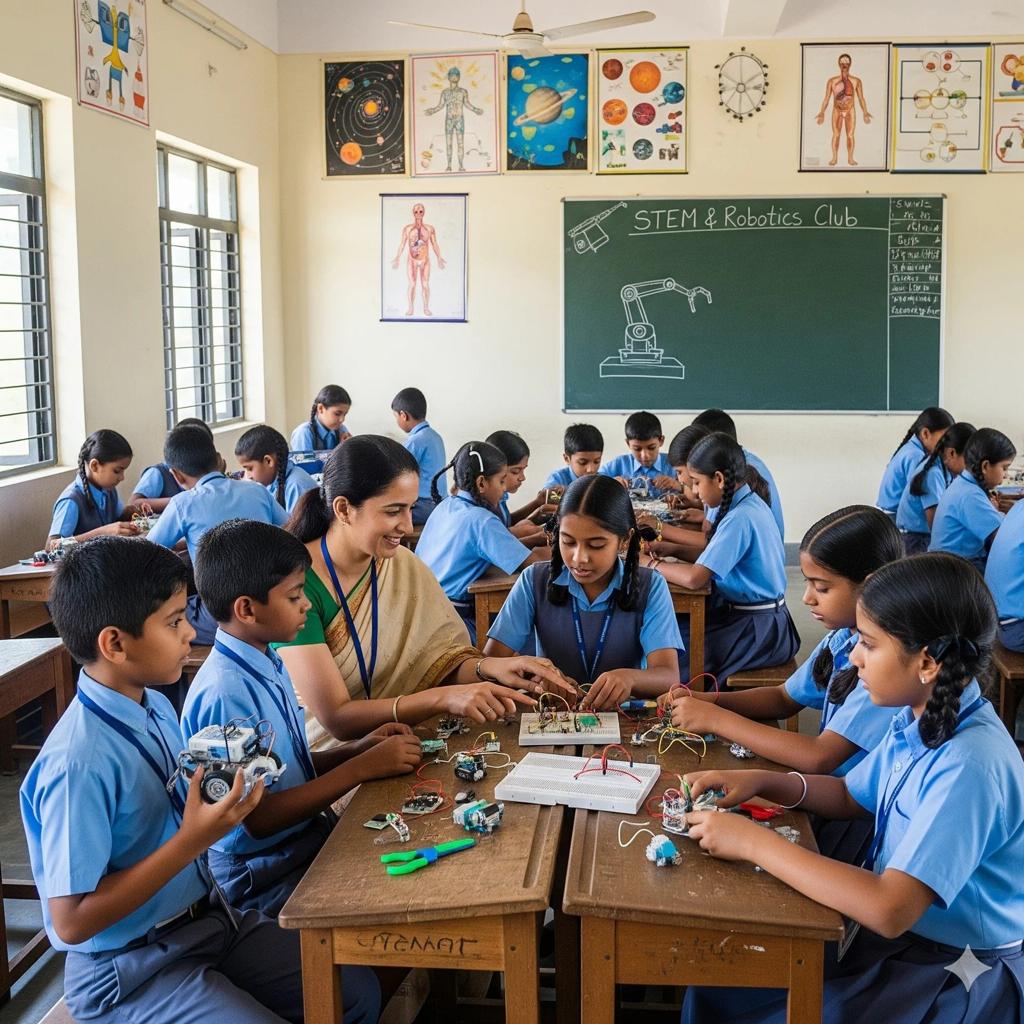
YOUNG INNOVATORS / GRADES 4–6 / APPLIED SCIENCE & AI
Young Innovators Programme
Discovering How the World Works
Suggested duration: 60 hours.
Tech Titans takes children a step further into the realm of applied science. With improved reasoning and cognitive ability at this age, learners are ready to explore the "how and why" behind real-world phenomena.
Explore seven learning domains through observation, logical reasoning, guided experiments and practical design challenges.
See fees and batch timings below. Batch dates and domain hours require confirmation. Enquiry does not reserve a place.
PLAN AHEAD
Course fee / 60 hours₹11,500 + 18% tax
Total including tax₹13,570
Regular, weekend and Sunday batches available. Monday–Saturday: preferred slots 9am–6pm; Sunday: 10am–1pm (IST). Slots, dates and places require availability confirmation.
Fees exclude 18% tax; totals include tax. Confirm material, licence and take-home kit charges before enrolment. Enquiry is not a reservation.
APPLIED SCIENCE / GRADES 4–6
Explore applied science, engineering and introductory AI.
Domain hours and session plans are confirmed with each batch.
From friction tests to classifier predictions: propose, measure, compare and explain.
01 / PROGRAMME OVERVIEW
Designed for children in Grades 4–6, Tech Titans connects scientific ideas with the objects, systems and phenomena learners encounter every day.
Children make predictions, investigate changes, build models and use observations to explain their thinking.
02 / SEVEN CONNECTED LEARNING DOMAINS
PHYSICS
Physics covers more structured concepts such as motion, force, energy, friction, light, sound, and magnetism. Children begin to understand how these forces affect daily life and learn to predict outcomes through observation and experimentation.
CHEMISTRY
Chemistry introduces properties of matter, basic chemical changes, states of matter, and simple reaction principles. Children explore how materials change and interact, fostering curiosity about the physical world.
ELECTRONICS
Electronics at this level moves into understanding electric circuits, current flow, switches, and the role of basic components like bulbs, buzzers, and sensors. Children start building functional circuits and experimenting with simple electronics.
SPACE SCIENCE
Space Science encourages the exploration of the solar system, space travel, gravity, and Earth's place in the universe. The content sparks their interest in space and scientific discovery.
ROCKET SCIENCE
Rocket Science delves into propulsion, air pressure, and Newton's Laws in a simplified, age-appropriate format. Learners explore how rockets launch and stay in motion.
ENGINEERING
Engineering includes the basics of simple machines like pulleys, levers, and gears. Children experiment with building and improving designs to achieve specific tasks, fostering problem-solving and creativity.
ARTIFICIAL INTELLIGENCE (AI)
Artificial Intelligence (AI) is introduced through logical reasoning and basic algorithm-based thinking. Students begin understanding how machines can follow instructions, learn from patterns, and make decisions.
03 / CURRICULUM EXPLORER
These are suggested learning topics and activity ideas, not a fixed session-by-session timetable. The existing suggested programme duration is 60 hours; domain allocations and batch schedules are confirmed by the team.
Motion and force; energy and friction; light and sound; magnetism.
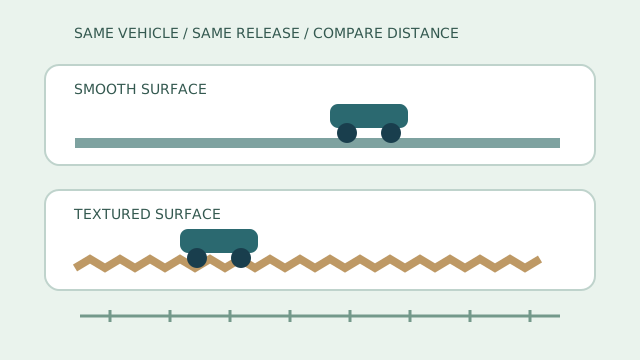
Predict which surface creates the most friction. Keep the ramp height and test vehicle the same, repeat each trial and compare stopping distances.
Project idea: Investigate Friction with a Test Vehicle.
Properties and states of matter; observable physical and chemical changes; simple reaction principles.
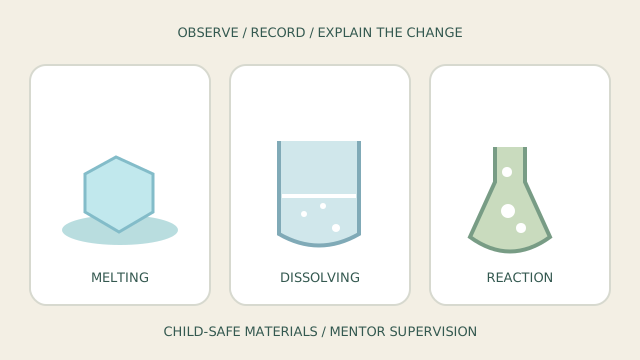
Compare dissolving, melting and a mentor-led reaction using child-safe materials. Record observable evidence and discuss which changes can be reversed.
Project idea: Create a Matter and Changes Investigation.
Current flow; open and closed circuits; switches; bulbs, buzzers and sensors.
Connect a sensor input to a buzzer output on a protected low-voltage training kit. Predict when the alarm should activate and test different input conditions.
Project idea: Design a Sensor-Triggered Alarm.
The solar system; gravity; Earth in the universe; space travel.
Choose a destination, compare its conditions with Earth and plan what a robotic explorer would need to measure. Explain the limits of a classroom mission model.
Project idea: Plan a Robotic Space Mission.
Propulsion; air pressure; simplified Newton's Laws; launch and motion.
Investigate air-driven motion with a balloon on a guide string. Keep the guide setup consistent, compare repeat trials and relate the motion to action and reaction.
Project idea: Run an Air-Propulsion Test Lab.
Pulleys, levers and gears; structural design; testing and improvement.
Design a tabletop lifting system using a pulley or lever. Test a small supervised load, explain how the mechanism changes the direction or effort of the lift, and improve the design.
Project idea: Engineer a Mini Lifting Machine.
Logical reasoning; algorithms; patterns and examples; simple machine decisions.
Label example shapes, use them to explore a simple classifier and test unseen examples. Compare predictions with labels, discuss mistakes and distinguish a fixed rule from learning patterns.
Project idea: Test a Shape Classifier with Unseen Data.
04 / TECH TITANS INVESTIGATION CHALLENGES
Suggested Grade 4–6 investigations connect a scientific question with a working model, a fair test and a reasoned explanation. These are curriculum ideas, not completed student work or guaranteed individual outcomes. Final scope depends on supervision and available materials.
PHYSICS CHALLENGE
Predict which surface creates the most friction. Keep the ramp height and test vehicle the same, repeat each trial and compare stopping distances.
CHEMISTRY CHALLENGE
Compare dissolving, melting and a mentor-led reaction using child-safe materials. Record observable evidence and discuss which changes can be reversed.
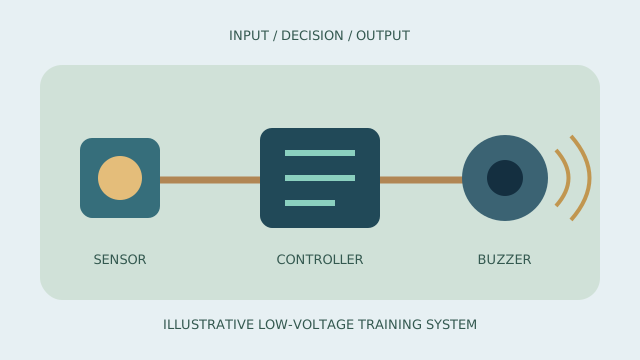
ELECTRONICS CHALLENGE
Connect a sensor input to a buzzer output on a protected low-voltage training kit. Predict when the alarm should activate and test different input conditions.
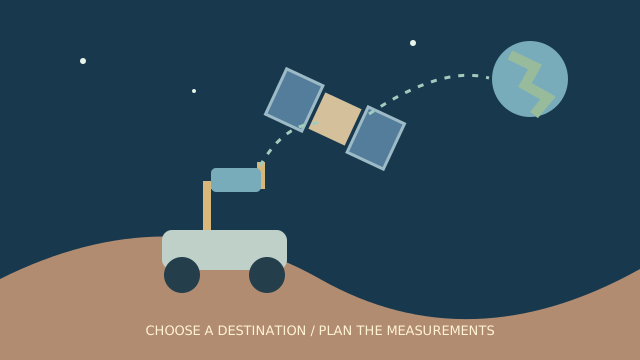
SPACE SCIENCE CHALLENGE
Choose a destination, compare its conditions with Earth and plan what a robotic explorer would need to measure. Explain the limits of a classroom mission model.
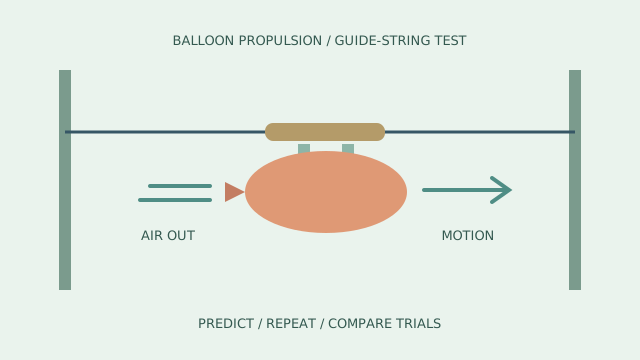
ROCKET SCIENCE CHALLENGE
Investigate air-driven motion with a balloon on a guide string. Keep the guide setup consistent, compare repeat trials and relate the motion to action and reaction.
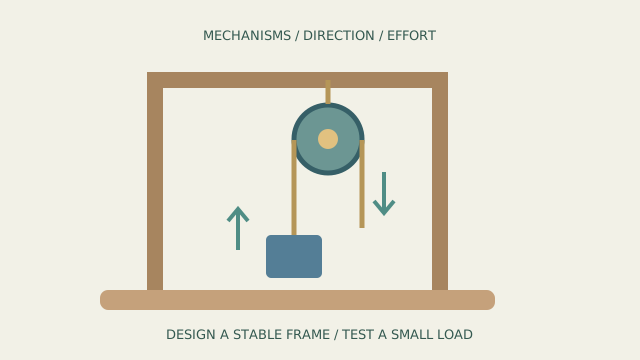
ENGINEERING CHALLENGE
Design a tabletop lifting system using a pulley or lever. Test a small supervised load, explain how the mechanism changes the direction or effort of the lift, and improve the design.
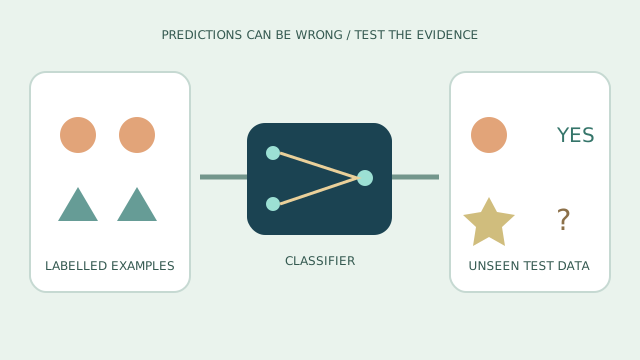
ARTIFICIAL INTELLIGENCE (AI) CHALLENGE
Label example shapes, use them to explore a simple classifier and test unseen examples. Compare predictions with labels, discuss mistakes and distinguish a fixed rule from learning patterns.
A TECH TITANS CASE STUDY / THE SENSOR ALARM
Follow a suggested alarm investigation: define the trigger, map the circuit, test its response and justify an improvement. Scroll on desktop or swipe through the stages on mobile.
Set a clear input condition and expected buzzer response. Predict what should happen when the condition is absent, present or uncertain.
Sketch sensor input, control decision and buzzer output. Build the circuit on a protected low-voltage training kit with mentor guidance.
Test the same conditions more than once. Log expected and observed responses, investigate false alarms and change one variable at a time.
Explain the relationship between input and output. Use the test record to support a design improvement and describe the system's limitations.
SYSTEMS THINKING / INTERACTIVE 3D ANALYSIS
Inspect this illustrative robot as a connected system, not just a collection of parts. Identify the energy source, sensor inputs, controller and moving outputs; predict how one missing connection would affect the whole device.
Use the exploded view to support a systems explanation. This conceptual model is not a promised course kit, a robot-building requirement or an accurate circuit diagram.
Explore the part descriptions alongside this view. The interactive model loads when JavaScript and WebGL are available.
Rotate to trace connections. Separate layers to identify subsystems; explain what each contributes.
05 / HOW LEARNING HAPPENS
Notice a real-world question.
Explain what you think will happen.
Try a guided, age-appropriate investigation.
Compare evidence and change the design.
Present your reasoning and discoveries.
06 / MATERIALS & SUPERVISION
Activities require adult supervision and age-appropriate materials. Use child-safe chemistry materials without tasting them, protected low-voltage circuits rather than mains electricity, and paper or air-powered classroom rocket models without fuel, fireworks or high-pressure launchers. AI activities need not collect children's personal data or require public accounts.
07 / EVIDENCE OF LEARNING
Learners can keep simple predictions, sketches, test observations and design changes as evidence of their investigation.
Explain how a model works, what a test showed and what could improve. Specific assessment and completion requirements are confirmed with the programme team.
08 / SHARE THE DISCOVERY
A guided project presentation gives learners an opportunity to explain their ideas, demonstrate a model and discuss improvements.
09 / FOR PARENTS & LEARNERS
Tech Titans is designed for learners in Grades 4–6. Starting level and any preparation can be discussed with a mentor.
Physics, Chemistry, Electronics, Space Science, Rocket Science, Engineering and introductory Artificial Intelligence.
Prior coding experience is not assumed for these introductory AI concepts. Logical reasoning, instructions and patterns provide the starting point.
The existing suggested duration is 60 hours. Domain hours, session frequency and the batch calendar are confirmed before enrolment.
Guided experiments and model-building ideas support the seven domains. Equipment, materials and individual project scope are confirmed for each batch.
The 60-hour course fee is ₹11,500 + 18% tax (₹13,570 including tax). Regular, weekend and Sunday batches available. Monday–Saturday: preferred slots 9am–6pm; Sunday: 10am–1pm (IST). Slots, dates and places require availability confirmation.
10 / TAKE THE NEXT STEP
Discuss Tech Titans for Grades 4–6, course suitability, fees and upcoming batches with the TECHNOVA team.
THE COURSE JOURNAL
Explore how Grades 4-6 learners can connect practical experiments, block-based decisions and responsible introductions to AI through explainable small projects.
Read the course article