STEM domains
From forces and circuits to space and structures.

YOUNG INNOVATORS · GRADES 1–3 · STEM EDUCATION
Young Innovators Programme · 60 hours
Discover. Explore. Experiment. Create.
Suggested duration: 60 hours.
A hands-on STEM learning experience for children in Grades 1–3. Through interactive experiments, creative challenges, storytelling, demonstrations and practical activities, children explore how things work, ask questions, test simple ideas and create their own models.
Across six learning domains—Physics, Chemistry, Electronics, Space Science, Rocket Science and Engineering—young learners build curiosity, creativity, logical thinking and early problem-solving skills.
See fees and batch timings below. Next batch dates and places require confirmation. Enquiry does not reserve a place.
PLAN AHEAD
Course fee / 60 hours₹9,000 + 18% tax
Total including tax₹10,620
Regular, weekend and Sunday batches available. Monday–Saturday: preferred slots 9am–6pm; Sunday: 10am–1pm (IST). Slots, dates and places require availability confirmation.
Fees exclude 18% tax; totals include tax. Confirm material, licence and take-home kit charges before enrolment. Enquiry is not a reservation.
SMALL STEPS. BIG DISCOVERIES.
From forces and circuits to space and structures.
Five guided sessions in each learning domain.
A curriculum framework; batch schedules are confirmed individually.
01 · PROGRAMME OVERVIEW
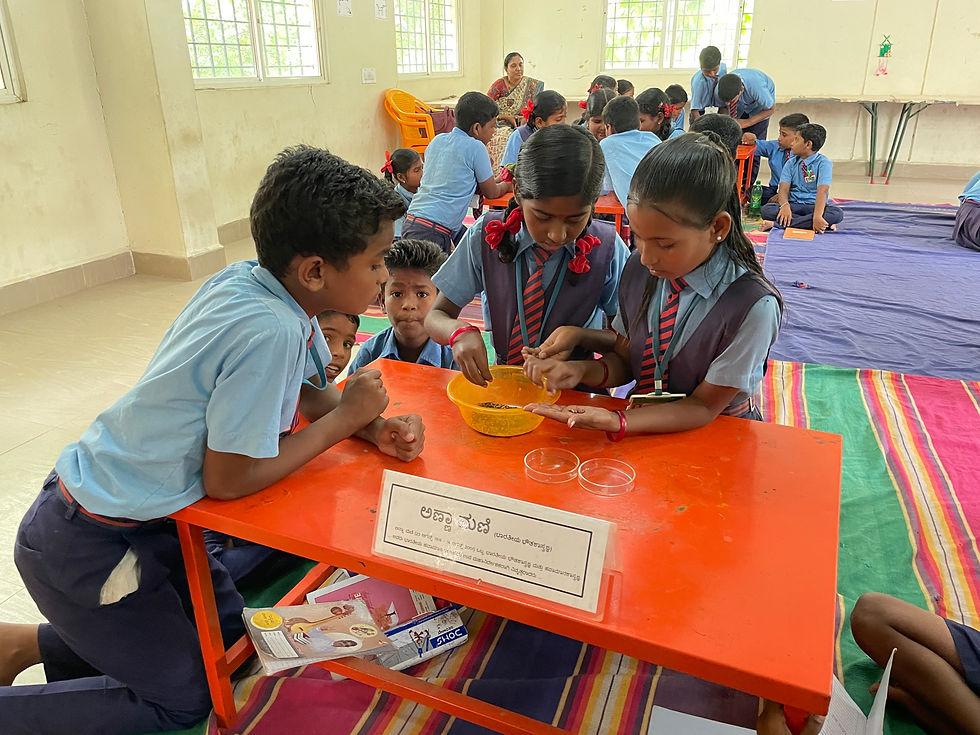
Children learn by doing: exploring familiar materials, noticing changes, trying ideas and sharing what they discover.
By the end of the programme, children will have opportunities to:
| Module | Learning domain | Hours |
|---|---|---|
| 1 | Physics — Discover How Things Move | 10 |
| 2 | Chemistry — Explore the World of Materials | 10 |
| 3 | Electronics — Light Up Your Imagination | 10 |
| 4 | Space Science — Explore the Universe | 10 |
| 5 | Rocket Science — Dream Beyond the Sky | 10 |
| 6 | Engineering — Imagine, Design and Build | 10 |
| Total | 60 | |
Final projects: Build a ball-rolling track; create a colour discovery chart; build an LED light circuit; make a 3D solar system model; design and launch a paper rocket; design and build a strong bridge.
02 · SIX EXCITING LEARNING DOMAINS
Each domain suggests 10 hours of guided learning through demonstrations, discussion and practical activities.
PHYSICS · 10 HOURS
Explore motion, force, gravity, friction, balance, magnets and floating and sinking through colourful demonstrations and simple experiments.
Learning outcome: Children understand how objects move, interact and behave in everyday situations.
CHEMISTRY · 10 HOURS
Discover solids, liquids, materials, mixtures, colour changes, dissolving and simple observable reactions through supervised activities.
Learning outcome: Children recognise different materials and understand how substances can change when combined or mixed.
ELECTRONICS · 10 HOURS
Introduce electricity, batteries, LED lights, switches, conductors, insulators and simple circuits using safe low-voltage learning kits.
Learning outcome: Children understand how a basic electrical circuit works and create a simple light-up project.
SPACE SCIENCE · 10 HOURS
Discover the Sun, Moon, planets, stars, Earth, the solar system, day and night and the wonders of space through storytelling and model-making.
Learning outcome: Children develop an understanding of our solar system and the objects in space.
ROCKET SCIENCE · 10 HOURS
Explore how rockets move, thrust, force, direction, air pressure and flight through balloon rockets, paper rocket models and supervised demonstrations.
Learning outcome: Children understand the basic idea behind rocket propulsion and movement.
ENGINEERING · 10 HOURS
Create towers, bridges, paper structures, simple machines and creative models using everyday materials and construction kits.
Learning outcome: Children develop design thinking, coordination, creativity and basic engineering skills.
03 · COMPLETE 60-HOUR CURRICULUM
Each module suggests five sessions of two hours. Session frequency and total calendar duration are confirmed with each batch.
Explore motion, force, gravity, friction, balance, magnets and floating and sinking through colourful demonstrations and simple experiments.
| Session | Topics covered | Hours |
|---|---|---|
| 1 | Introduction to Physics and Observation | 2 |
| 2 | Motion, Speed and Direction | 2 |
| 3 | Force, Push and Pull | 2 |
| 4 | Gravity, Balance and Friction | 2 |
| 5 | Floating, Sinking and Magnetism | 2 |
| Total | 10 | |
Mini project: Build a Ball-Rolling Track.
Safety: Activities are guided and use age-appropriate materials.
Discover solids, liquids, materials, mixtures, colour changes, dissolving and simple observable reactions through supervised activities.
| Session | Topics covered | Hours |
|---|---|---|
| 1 | Introduction to Chemistry and Materials | 2 |
| 2 | Solids, Liquids and Basic Properties | 2 |
| 3 | Mixing and Dissolving | 2 |
| 4 | Colour Mixing and Observable Changes | 2 |
| 5 | Simple Reactions and Material Exploration | 2 |
| Total | 10 | |
Mini project: Create a Colour Discovery Chart.
Safety: Use only child-safe household materials under adult supervision. Never taste experimental materials.
Introduce electricity, batteries, LED lights, switches, conductors, insulators and simple circuits using safe low-voltage learning kits.
| Session | Topics covered | Hours |
|---|---|---|
| 1 | Introduction to Electricity and Electronics | 2 |
| 2 | Understanding Batteries and Power | 2 |
| 3 | LED Lights and Simple Components | 2 |
| 4 | Open and Closed Circuits and Switches | 2 |
| 5 | Building a Simple Electronic Project | 2 |
| Total | 10 | |
Mini project: Build Your First LED Light Circuit.
Safety: Use low-voltage batteries and protected educational kits only. No mains electricity or exposed household electrical wiring.
Discover the Sun, Moon, planets, stars, Earth, the solar system, day and night and the wonders of space through storytelling and model-making.
| Session | Topics covered | Hours |
|---|---|---|
| 1 | Introduction to Space and Astronomy | 2 |
| 2 | The Sun, Earth and Moon | 2 |
| 3 | Exploring the Eight Planets | 2 |
| 4 | Stars, Constellations and the Moon | 2 |
| 5 | Solar System Model and Space Exploration | 2 |
| Total | 10 | |
Mini project: Build a 3D Solar System Model.
Safety: Activities use supervised demonstrations and age-appropriate models.
Explore how rockets move, thrust, force, direction, air pressure and flight through balloon rockets, paper rocket models and supervised demonstrations.
| Session | Topics covered | Hours |
|---|---|---|
| 1 | Introduction to Rockets and Space Travel | 2 |
| 2 | Understanding Force, Thrust and Direction | 2 |
| 3 | Air Pressure and Balloon Rocket Experiments | 2 |
| 4 | Paper Rocket Design and Launch | 2 |
| 5 | Rocket Model Building and Challenge | 2 |
| Total | 10 | |
Mini project: Design and Launch a Paper Rocket.
Safety: Use paper, balloons and classroom launchers. No fuel, explosives, fireworks or high-pressure launch systems.
Create towers, bridges, paper structures, simple machines and creative models using everyday materials and construction kits.
| Session | Topics covered | Hours |
|---|---|---|
| 1 | Introduction to Engineering and Design | 2 |
| 2 | Shapes, Patterns and Strong Structures | 2 |
| 3 | Building Towers and Bridges | 2 |
| 4 | Simple Machines and Creative Models | 2 |
| 5 | Engineering Design Challenge and Presentation | 2 |
| Total | 10 | |
Mini project: Design and Build a Strong Bridge.
Safety: Construction and model-making activities are guided and age-appropriate.
04 · HANDS-ON PROJECT IDEAS
Every child has opportunities to create independently or as part of a team. These are curriculum examples, not claims of completed student work.
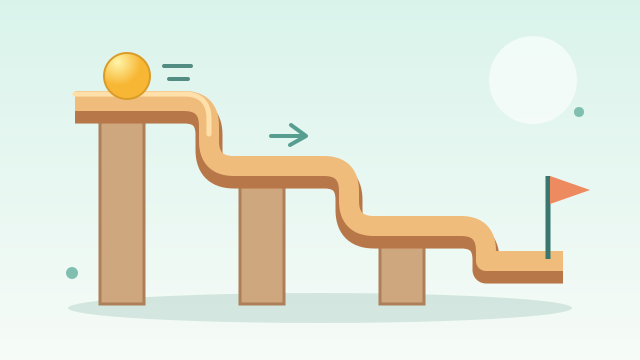
PHYSICS PROJECT
A guided, age-appropriate curriculum idea. Materials and activity scope depend on availability and supervision.
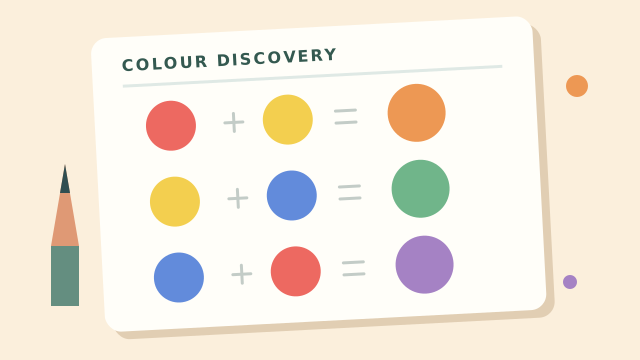
CHEMISTRY PROJECT
A guided, age-appropriate curriculum idea. Materials and activity scope depend on availability and supervision.
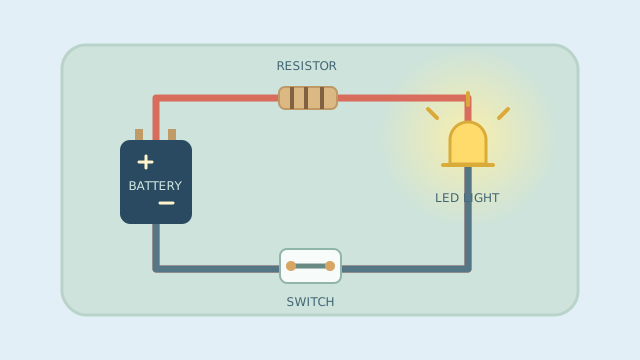
ELECTRONICS PROJECT
A guided, age-appropriate curriculum idea. Materials and activity scope depend on availability and supervision.
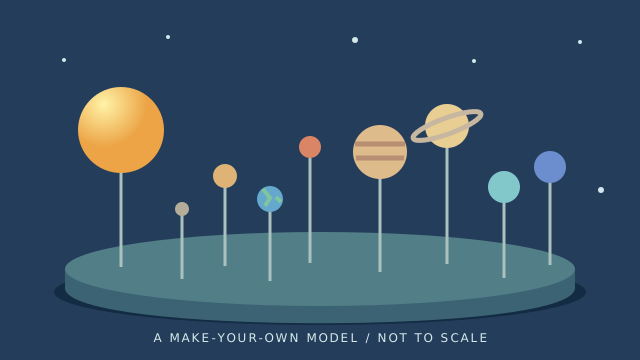
SPACE SCIENCE PROJECT
A guided, age-appropriate curriculum idea. Materials and activity scope depend on availability and supervision.
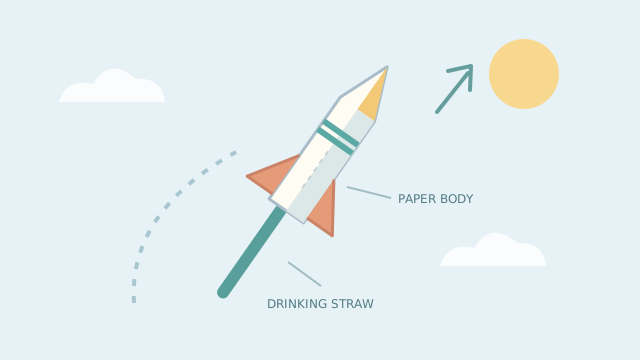
ROCKET SCIENCE PROJECT
A guided, age-appropriate curriculum idea. Materials and activity scope depend on availability and supervision.
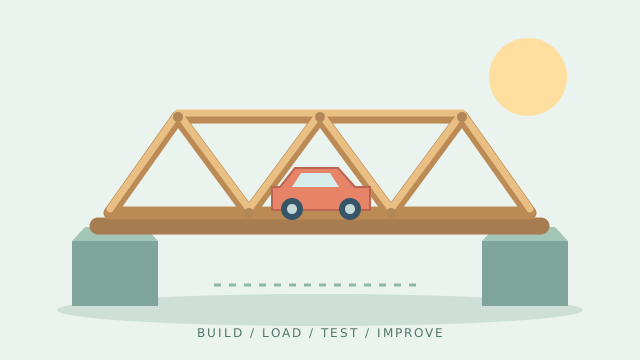
ENGINEERING PROJECT
A guided, age-appropriate curriculum idea. Materials and activity scope depend on availability and supervision.
FROM A QUESTION TO A CREATION
Scroll to follow the journey. On a smaller screen, swipe the cards or use your keyboard.
Start with a question. Notice how a ball moves or why a light turns on.
Use age-appropriate materials to build a simple track, circuit or model.
Change one thing, compare what happens and talk about your observations.
Explain what you made, what surprised you and what you would try next.
A CLOSER LOOK / INTERACTIVE 3D
Explore this illustrative robot model. Rotate it, separate its layers and discover how structure, power and sensing fit together.
This is an engineering concept demonstration, not a kit promised with enrolment.
Explore the part descriptions alongside this view. The interactive model loads when JavaScript and WebGL are available.
Drag to rotate. On desktop, scroll to separate the layers, or use the controls.
05 · TEACHING METHODOLOGY
Learning activities are guided to make science enjoyable, understandable and memorable.
Explore objects, pictures and real-world demonstrations.
Ask why, what and how questions about what they notice.
Try simple, guided experiments and activities.
Turn ideas into models, designs and mini projects.
Share discoveries, explain projects and celebrate learning.
06 · SKILLS CHILDREN WILL DEVELOP
Observe and explore the world around them.
Notice patterns and understand cause and effect.
Design new ideas, models and ways to investigate.
Try solutions, learn from tests and make improvements.
Build and handle age-appropriate materials.
Explain discoveries and share project ideas.
Work together on guided challenges.
Present projects and describe their own thinking.
07 · LEARNING RESOURCES
The programme can use age-appropriate educational kits, reusable materials and supervised science equipment. Exact equipment and availability are confirmed for each batch.
Safety first: Activities use suitable materials and supervision. Chemistry activities use child-safe materials; electronics use protected low-voltage kits only. No mains wiring, fuels, explosives or high-pressure launch systems are part of these activities.
08 · ASSESSMENT AND LEARNING EVALUATION
Suggested evaluation focuses on participation, understanding, creativity and practical application rather than examination pressure. The assessment approach is confirmed with the learning cohort.
| Assessment component | Suggested weight |
|---|---|
| Activity Participation | 20% |
| Concept Understanding | 20% |
| Practical Experiments | 20% |
| Mini Projects | 25% |
| Creativity & Presentation | 15% |
| Total | 100% |
09 · FINAL STEM SHOWCASE
The programme can conclude with a Little Scholars STEM Showcase where students display models, demonstrate experiments and explain discoveries to teachers, parents and fellow students.
The showcase is designed to encourage confidence, teamwork, communication and pride in learning.
10 · CERTIFICATION
Eligible students who successfully complete the programme receive a Little Scholars – Young Innovators Programme Completion Certificate, recognising participation, practical learning and completion of the 60-hour curriculum.
11 · WHY CHOOSE LITTLE SCHOLARS?
Practical science activities help children explore ideas beyond memorisation.
Questions and open-ended challenges make room for curiosity and new ideas.
Shared activities help children practise teamwork and communication.
Models and mini projects give children ways to apply and share what they learn.
12 · COURSE FAQs
Questions families often ask before enrolment. Ask our team about course suitability, available batches and learning arrangements.
The programme is designed for children studying in Grades 1–3, approximately 6–9 years old.
No. The programme starts with simple concepts and gradually introduces children to practical STEM activities.
Yes. Activities are designed for beginners and adapted to the children's learning levels.
Yes. Children participate in supervised experiments, model-making activities, simple circuit construction and engineering challenges.
Activities use age-appropriate materials, low-voltage educational kits and supervised demonstrations with suitable safety procedures.
Eligible students receive a programme completion certificate after completing the curriculum.
Project examples include a ball track, colour experiments, an LED circuit, a solar system model, a paper rocket and engineering structures.
The complete curriculum consists of 60 suggested learning hours across six STEM domains. Session frequency and calendar duration are confirmed for each batch.
13 · START WITH CURIOSITY
Give your child an opportunity to explore science, build creative ideas and discover the world through hands-on STEM learning.
Little Scholars — where young minds become young innovators.
PARENT / GUARDIAN ENQUIRY
Ask about fees, upcoming batches, timings, classroom or STEM lab availability, or course suitability.
THE COURSE JOURNAL
Discover how Grades 1-3 learners can explore STEM through observation, simple comparisons and adult-guided making without needing advanced technical vocabulary.
Read the course article