CONNECTED EMBEDDED SYSTEMS / UNDERSTAND. APPLY. VERIFY.

CONNECTED EMBEDDED SYSTEMS / ENGINEERING LEARNING

Advanced Embedded Systems with ESP32

Build firmware that stays useful when the network changes.

Suggested duration: 90 hours.

Develop connected embedded products through ESP32 architecture, advanced C/C++, peripheral and sensor integration, Wi-Fi and Bluetooth, IoT cloud platforms, FreeRTOS, debugging, security fundamentals and PCB design. Complete six practical projects and a final technical demonstration.

Starting level, batch dates, software and equipment are confirmed through counselling. See fees and batch timings below. An enquiry is not a confirmed booking.

An ESP32 concept board sends animated wireless packets to a receiving device, with a status indicator representing communication and connection monitoring. This is a conceptual animation, not a functional simulation or wiring guide. THE WIRELESS FIRMWARE ENGINE ESP32PERIPHERALS / FIRMWARE LOCAL INPUT WIRELESS RXLINK STATUS GPIO / TIMERSWI-FI / BLUETOOTHCONNECTION STATUS

PLAN AHEAD

Clear fees.
Flexible batches.

Course fee / 90 hours₹16,999 + 18% tax

Total including tax₹20,058.82

Batch options

Regular, weekend and Sunday batches available. Monday–Saturday: preferred slots 9am–6pm; Sunday: 10am–1pm (IST). Slots, dates and places require availability confirmation.

Fees exclude 18% tax; totals include tax. Confirm material, licence and take-home kit charges before enrolment. Enquiry is not a reservation.

Learning pathway
Connected embedded systems
Suggested duration
90 hours
Curriculum
11 topics / modules
Availability
Confirm by enquiry

ADVANCED EMBEDDED SYSTEMS WITH ESP32 / AT A GLANCE

A clear learning scope.
Practical work with context.

11

Detailed curriculum modules

Explore the supplied connected embedded systems learning sequence.

90

Suggested learning hours

Session frequency and calendar duration are confirmed by enquiry.

6

Two-hour practical projects

Six applications share the 12 hours allocated to Module 10.

01 / COURSE PERSPECTIVE

Understand the system.
Build firmware that stays useful when the network changes.

Starting point

Suggested preparation: basic C/C++, simple circuits and introductory microcontroller programming.

Discuss preparation and readiness with a mentor before choosing a batch. These are recommended starting points, not a guarantee of placement.

Evidence of learning

Configure ESP32 peripherals, write modular non-blocking C/C++ firmware, integrate sensors and actuators, connect Wi-Fi/BLE and cloud services, coordinate FreeRTOS tasks, debug firmware and hardware, and demonstrate connected embedded projects.

Project scope depends on supervision, equipment and practice. Examples describe learning activities, not verified student work or guaranteed outcomes.

02 / WHAT YOU WILL WORK ON

Build understanding.
Make your choices explainable.

Configure peripherals

Use GPIO, PWM, ADC, interrupts and timers with the capabilities of the selected ESP32 variant.

Connect deliberately

Relate Wi-Fi, Bluetooth and MQTT choices to the application's communication requirements.

Coordinate and validate firmware

Use FreeRTOS tasks, queues and synchronization; examine debugging, security fundamentals, power use and recovery from connection loss.

03 / CURRICULUM & PRACTICE

Complete module-wise syllabus.
90 hours of connected embedded development.

Eleven modules total 90 hours. Six two-hour projects are included in Module 10; the final three hours cover assessment and demonstration. Check the selected ESP32 variant: CPU cores, DAC, Bluetooth Classic and other peripherals differ across devices.

MODULE 01Advanced Embedded Systems Architecture5 HOURS

Module 1: Advanced Embedded Systems Architecture (5 Hours)

  • Advanced Embedded Systems Concepts
  • Embedded System Hardware and Software Architecture
  • Microcontroller vs Microprocessor
  • 8-bit, 16-bit and 32-bit Microcontroller Architecture
  • ARM Cortex-M and RISC-V Fundamentals
  • Embedded Memory Architecture
  • RAM, ROM, Flash and EEPROM
  • Interrupt-Driven Embedded Systems
  • Real-Time Embedded Systems Fundamentals
  • Embedded Product Development Lifecycle
  • Introduction to Connected Embedded Devices
  • Industry 4.0 and Industrial IoT Architecture
MODULE 02ESP32 Architecture & Hardware Configuration8 HOURS

Module 2: ESP32 Architecture & Hardware Configuration (8 Hours)

  • Introduction to ESP32 Microcontrollers
  • ESP32 Architecture and Functional Blocks
  • ESP32 SoC Features and Specifications
  • Dual-Core Processor Architecture
  • Xtensa and RISC-V ESP32 Family Overview
  • CPU Clock and Memory Configuration
  • GPIO Pin Configuration and Mapping
  • Digital Input and Output Configuration
  • Analog-to-Digital Converter (ADC)
  • Digital-to-Analog Conversion (DAC) on supported ESP32 variants
  • PWM and LED Control
  • Timers and Hardware Interrupts
  • Watchdog Timer
  • UART, SPI and I2C Peripheral Architecture
  • ESP32 Power Management
  • Boot Modes and Firmware Flashing
  • ESP32 Development Board Selection
MODULE 03Advanced Embedded C/C++ Programming10 HOURS

Module 3: Advanced Embedded C/C++ Programming (10 Hours)

  • Advanced Embedded C Programming
  • Embedded C++ Fundamentals
  • Variables, Data Types and Memory Management
  • Pointers and Pointer Arithmetic
  • Structures, Unions and Enumerations
  • Bitwise Operations and Register Manipulation
  • Memory-Mapped I/O
  • Header Files and Modular Programming
  • Functions and Function Pointers
  • Interrupt Service Routines (ISR)
  • Volatile and Const Keywords
  • Static and Global Variables
  • Dynamic Memory Allocation
  • Arrays, Buffers and Data Structures
  • State Machine Programming
  • Non-Blocking Programming Techniques
  • Code Optimization and Memory Efficiency
  • Firmware Architecture and Reusable Libraries
  • Error Handling and Exception Fundamentals
MODULE 04GPIO, Peripheral & Hardware Interfacing8 HOURS

Module 4: GPIO, Peripheral & Hardware Interfacing (8 Hours)

  • Advanced GPIO Programming
  • Digital Input and Output Management
  • Interrupt-Based GPIO Control
  • Hardware Debouncing
  • ADC-Based Analog Signal Acquisition
  • PWM Signal Generation
  • LED Brightness and Motor Speed Control
  • DAC and Analog Signal Generation on supported hardware
  • UART Communication and Serial Monitoring
  • SPI Device Interfacing
  • I2C Device Interfacing
  • OLED and LCD Display Integration
  • Keypad and Input Device Interfacing
  • Relay and MOSFET Driver Circuits
  • DC, Servo and Stepper Motor Interfacing
  • Hardware Timer Configuration
MODULE 05Advanced Sensor & Actuator Integration8 HOURS

Module 5: Advanced Sensor & Actuator Integration (8 Hours)

  • Advanced Sensor Integration Concepts
  • Analog and Digital Sensor Data Acquisition
  • Temperature and Humidity Sensors
  • BME280 Environmental Sensor
  • DHT22 Sensor Integration
  • Pressure and Altitude Measurement
  • Ultrasonic Distance Measurement
  • IR and Proximity Sensors
  • PIR Motion Detection
  • Gas and Air Quality Sensors
  • MPU6050 Accelerometer and Gyroscope
  • Hall Effect and Magnetic Sensors
  • Current and Voltage Monitoring
  • Sensor Calibration and Filtering
  • Moving Average and Basic Digital Filtering
  • Sensor Fusion Fundamentals
  • Servo, DC and Stepper Motor Control
  • Relay, Solenoid and MOSFET-Based Actuation
MODULE 06Wi-Fi, Bluetooth & Wireless Communication10 HOURS

Module 6: Wi-Fi, Bluetooth & Wireless Communication (10 Hours)

  • Wireless Communication Fundamentals
  • ESP32 Wi-Fi Architecture
  • Wi-Fi Station Mode
  • Wi-Fi Access Point Mode
  • Wi-Fi Station + Access Point Mode
  • Wi-Fi Configuration and Connection Management
  • Static IP and DHCP Configuration
  • TCP/IP Fundamentals
  • HTTP and HTTPS Communication
  • REST API Integration
  • JSON Data Exchange
  • WebSocket Communication Fundamentals
  • Bluetooth Classic Fundamentals
  • Bluetooth Low Energy (BLE)
  • BLE Advertising and Scanning
  • BLE GATT Services and Characteristics
  • Mobile Application Communication
  • Wireless Device-to-Device Communication
  • Wi-Fi and Bluetooth Troubleshooting
MODULE 07IoT Protocols & Cloud Integration10 HOURS

Module 7: IoT Protocols & Cloud Integration (10 Hours)

  • Introduction to Internet of Things
  • IoT System Architecture
  • IoT Device-to-Cloud Communication
  • MQTT Protocol Fundamentals
  • MQTT Publisher and Subscriber
  • MQTT Broker Configuration
  • Topic Management and QoS
  • MQTT Retained Messages and Last Will
  • HTTP REST API Integration
  • JSON-Based IoT Data Transmission
  • Cloud Platforms and Device Connectivity
  • Introduction to ThingsBoard
  • Introduction to Blynk IoT
  • Node-RED Dashboard Integration
  • Real-Time Sensor Monitoring
  • Cloud-Based Device Control
  • Data Logging and Visualization
  • Remote Device Monitoring
  • OTA (Over-the-Air) Firmware Update Fundamentals
MODULE 08FreeRTOS & Real-Time Embedded Programming10 HOURS

Module 8: FreeRTOS & Real-Time Embedded Programming (10 Hours)

  • Introduction to Real-Time Operating Systems
  • Bare-Metal vs RTOS Programming
  • FreeRTOS Architecture
  • ESP32 FreeRTOS Environment
  • Tasks and Task Scheduling
  • Task Creation and Deletion
  • Task Priorities
  • Task States and Context Switching
  • Inter-Task Communication
  • Queue Management
  • Binary and Counting Semaphores
  • Mutex and Resource Management
  • Software Timers
  • Event Groups
  • Interrupt Management in RTOS
  • Multitasking and Dual-Core Processing
  • Task Synchronization
  • Stack and Heap Management
  • Real-Time Performance Monitoring
  • Deadlock and Race Condition Fundamentals
MODULE 09Embedded Debugging, Security & PCB Design6 HOURS

Module 9: Embedded Debugging, Security & PCB Design (6 Hours)

  • ESP32 Firmware Debugging
  • Serial Logging and Diagnostics
  • JTAG Debugging Fundamentals
  • Logic Analyzer and Oscilloscope Usage
  • Hardware Fault Identification
  • Memory and Performance Optimization
  • Watchdog Configuration
  • Secure Boot Fundamentals
  • Flash Encryption Fundamentals
  • Wi-Fi Security and Network Authentication
  • Secure Communication Using TLS
  • Firmware Update Security
  • PCB Design Fundamentals
  • Schematic Capture
  • PCB Layout and Routing
  • Power Supply and Voltage Regulation
  • Embedded Hardware Testing
MODULE 10Advanced ESP32 Industrial & IoT Projects12 HOURS

Module 10: Advanced ESP32 Industrial & IoT Projects (12 Hours)

  • Students will develop connected embedded products using ESP32, sensors, actuators, wireless communication and cloud platforms.
Practical projects within Module 10
Practical ProjectHours
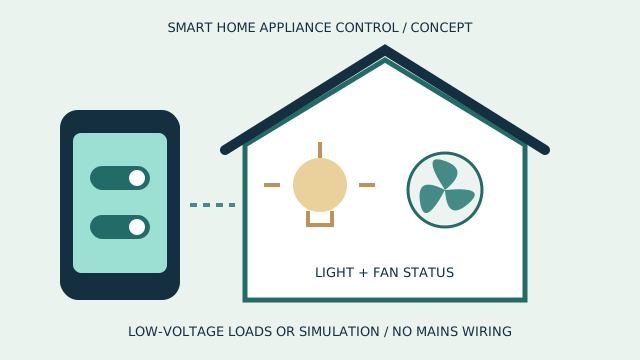
IoT-Based Smart Home Automation2
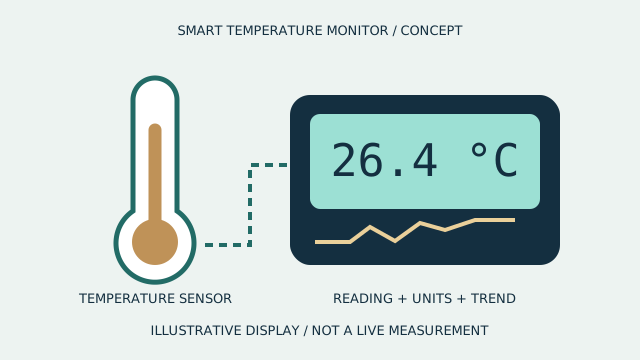
Cloud-Based Environmental Monitoring System2
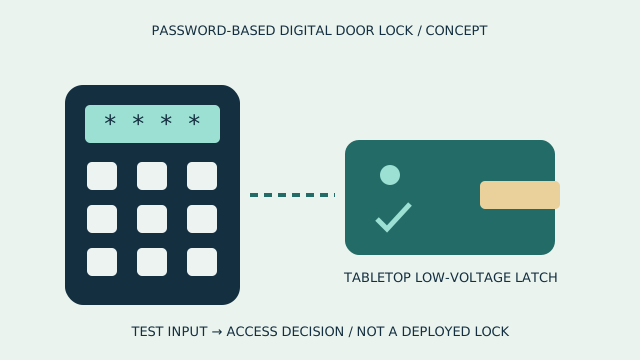
BLE-Based Smart Access Control System2
MQTT-Based Remote Industrial Monitoring2
ESP32-Based Energy Monitoring System2
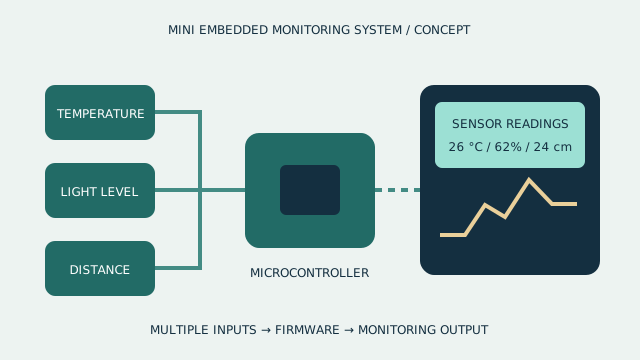
FreeRTOS-Based Multi-Sensor Monitoring System2
Total12
MODULE 11Final Assessment & Project Demonstration3 HOURS

Module 11: Final Assessment & Project Demonstration (3 Hours)

  • Advanced Embedded C Programming Test
  • ESP32 Hardware Configuration Assessment
  • Wireless Communication Practical
  • IoT Cloud Integration Evaluation
  • Firmware Debugging and Troubleshooting
  • Final Project Demonstration
  • Technical Viva and Evaluation

CONNECTED EMBEDDED SYSTEMS / PROJECT WORKFLOW

Follow the decisions.
Explain the result.

Scroll to follow the journey. On a smaller screen, swipe the cards or use your keyboard.

01 / DEFINE

Define device behavior

Separate sensing, timing and communication requirements.

02 / DEVELOP

Test local firmware

Check peripherals before adding a wireless connection.

03 / TEST

Exercise the network

Compare normal communication with disconnection and reconnection.

04 / REVIEW

Explain the trade-offs

Present logs, power assumptions and remaining limitations.

CONNECTED EMBEDDED SYSTEMS / INTERACTIVE CONCEPT

Inspect the layers.
Trace the dependencies.

Review a connected node, its communication layer and the receiving interface. Separate the conceptual layers to distinguish local firmware faults from network and dashboard faults.

This illustrative 3D model is not a hardware specification, a functional simulation, a fabrication file or equipment promised with enrolment.

  • Configure peripherals Use GPIO, PWM, ADC, interrupts and timers with the capabilities of the selected ESP32 variant.
  • Connect deliberately Relate Wi-Fi, Bluetooth and MQTT choices to the application's communication requirements.
  • Coordinate and validate firmware Use FreeRTOS tasks, queues and synchronization; examine debugging, security fundamentals, power use and recovery from connection loss.
Understand. Apply. Verify.

Review a connected node, its communication layer and the receiving interface. Separate the conceptual layers to distinguish local firmware faults from network and dashboard faults. Interactive rotation and layer separation require JavaScript and WebGL.

Drag to rotate. On desktop, scroll to separate the layers, or use the controls.

05 / TOOLS & RESPONSIBLE PRACTICE

Know the setup.
Respect its limits.

Suggested learning environment

Suggested setup: a suitable ESP32 board, supported C/C++ development environment and FreeRTOS, sensors, protected low-voltage actuators, displays, test Wi-Fi/BLE networks, an MQTT broker and ThingsBoard, Blynk IoT or Node-RED. JTAG, logic analyzer, oscilloscope and PCB tools depend on supervised lab access; check all device and software capabilities.

Confirm hardware, software versions, licences, consumables, fabrication and lab access before enrolment. No personal kit or software licence is promised.

Course-specific boundaries

Use isolated test networks, non-sensitive data and protected low-voltage or simulated circuits. No mains energy measurement, deployed access control or live industrial connections are authorized. Confirm variant-specific cores, DAC, Bluetooth and pin capabilities. Secure boot and flash encryption require mentor guidance because configuration can be irreversible; do not expose device control directly to the public internet.

06 / BEFORE YOU JOIN

Course FAQs

What does Advanced Embedded Systems with ESP32 cover?

Develop connected embedded products through ESP32 architecture, advanced C/C++, peripheral and sensor integration, Wi-Fi and Bluetooth, IoT cloud platforms, FreeRTOS, debugging, security fundamentals and PCB design. Complete six practical projects and a final technical demonstration.

What should I know before joining?

Suggested preparation: basic C/C++, simple circuits and introductory microcontroller programming.

What practical work could I discuss?

Configure ESP32 peripherals, write modular non-blocking C/C++ firmware, integrate sensors and actuators, connect Wi-Fi/BLE and cloud services, coordinate FreeRTOS tasks, debug firmware and hardware, and demonstrate connected embedded projects. The application studio shows selected briefs or stages.

How long does this course take?

The suggested curriculum is 90 hours. Confirm session frequency, batch dates and any independent practice time before booking.

Are tools included, and is the course online or offline?

Suggested setup: a suitable ESP32 board, supported C/C++ development environment and FreeRTOS, sensors, protected low-voltage actuators, displays, test Wi-Fi/BLE networks, an MQTT broker and ThingsBoard, Blynk IoT or Node-RED. JTAG, logic analyzer, oscilloscope and PCB tools depend on supervised lab access; check all device and software capabilities. Equipment, licences, fees, delivery mode and lab access must be confirmed for each batch.

Can I enrol now?

Request counselling to confirm prerequisites, course availability and scheduling. An enquiry is not a confirmed booking.

START WITH A COURSE CONVERSATION

Advanced Embedded Systems with ESP32.
Plan your next practical step.

Share your current experience and project goals. Confirm readiness, availability, fees, tools and class arrangements with TECHNOVA.

Request course counselling

THE COURSE JOURNAL

A useful idea.
A deeper perspective.

ESP32 Projects: Design for Disconnection

Explore why advanced ESP32 learning includes wireless recovery, task timing, power choices and credential handling, not just sending a sensor reading online.

Read the course article